What Is a Portmanteau? Meaning and Easy Examples
You already know more portmanteaus than you think. If you're wondering what a portmanteau is, it's a word made by blending pieces of two words into one, like brunch from breakfast and lunch.
These blended words matter because they save space, sharpen meaning, and often sound more lively than longer phrases. They also help name new ideas fast, which is why they show up in menus, headlines, apps, and group chats.
Once you notice the pattern, you start seeing it everywhere. First, it helps to understand how the blend is built.
How a Portmanteau Word Is Built
A portmanteau is more than two words placed side by side. A true blend trims at least one original word, then joins sound and meaning into something new.
The Simple Rule Behind the Blend
Start with two related words. Cut away part of one or both, then join what remains so the new word still sounds natural.
Brunch keeps the start of breakfast and the end of lunch. Smog does the same with smoke and fog. In both cases, the new word carries both ideas at once, so the meaning feels clear after you hear it.
For a clean reference, Britannica's portmanteau word entry describes the same core idea: a blended word with a combined meaning.
How Portmanteaus Are Different From Compound Words
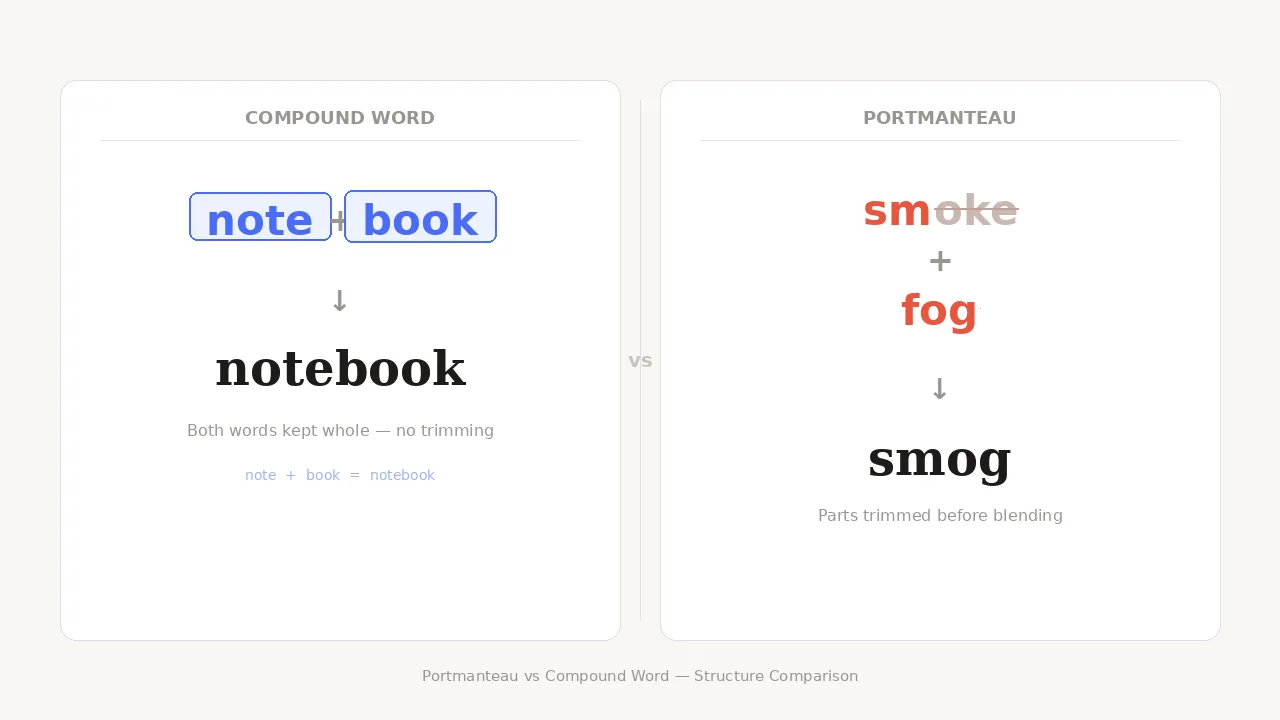
Portmanteaus and compound words look similar, but they aren't built the same way. A compound word keeps the original words whole. A portmanteau usually cuts them down first.
This quick comparison makes the difference easier to see.
| Type | Example | What happens | | :--- | :--- | :--- | | Compound word | notebook | note + book stay whole | | Compound word | football | foot + ball stay whole | | Portmanteau | brunch | breakfast + lunch are shortened | | Portmanteau | smog | smoke + fog are shortened |
So, a notebook is a join, while a brunch is a blend. That small difference is what makes portmanteaus feel tighter and often more playful.
Common Portmanteau Examples People Already Know
Everyday Words That Started as Blends
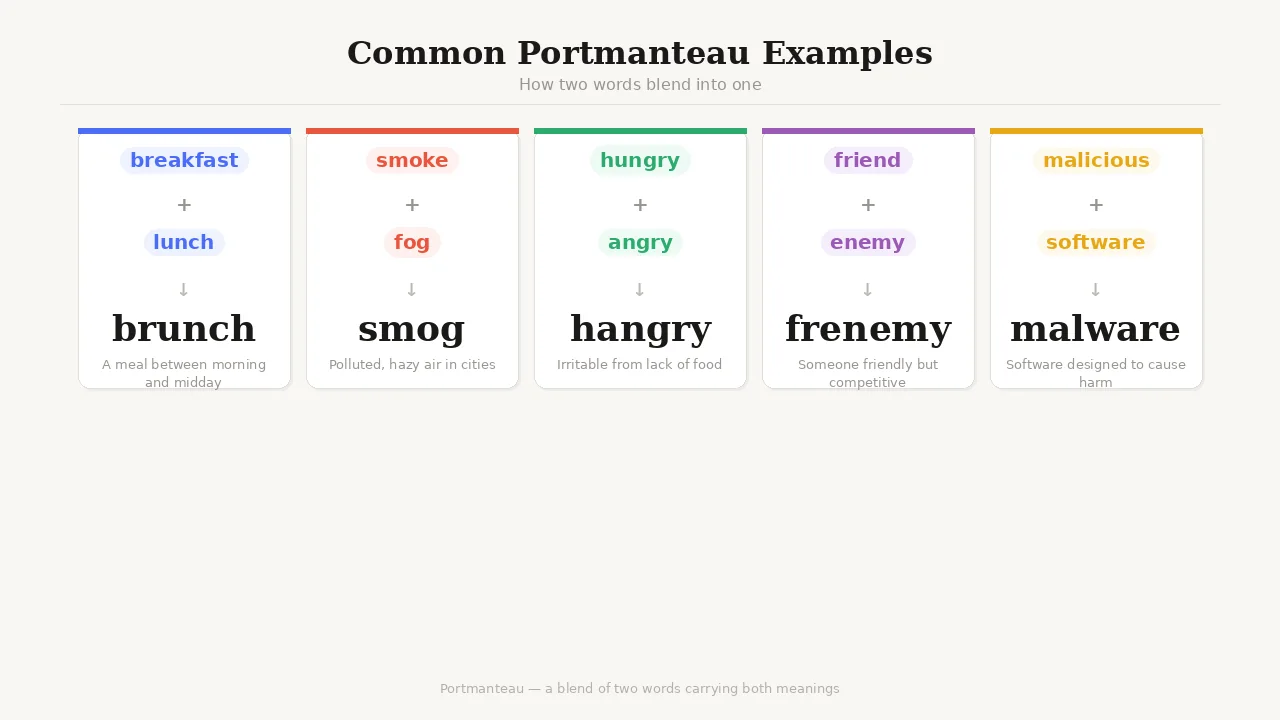
Many portmanteaus feel so normal that their parts almost disappear. Brunch names a meal between breakfast and lunch, so one compact word fits better than a long explanation. Smog joins smoke and fog, which captures polluted air in a quick, vivid way.
Spork blends spoon and fork, and the object itself is also a blend. Motel comes from motor and hotel, which made sense when roadside lodging became common for drivers. Hangry combines hungry and angry, and it works because the mood is instantly familiar.
A good portmanteau often feels obvious once you hear it. If you want to test that pattern yourself, you can blend two words together and compare which results sound smooth and which ones feel clumsy.
Modern Examples From Tech, Culture, and Slang
New tools and trends need names fast, so portmanteaus show up all over tech and media. Podcast combines iPod and broadcast. Malware turns malicious software into a short warning that feels direct and easy to remember.
Emoticon joins emotion and icon, which fits those early keyboard faces and symbols. Frenemy mixes friend and enemy, and it neatly captures a relationship that feels warm on the surface but hostile underneath.
Blog is a slightly messier case. It came from weblog, then got clipped again to blog. Even so, people often group it with modern blends because the word's history starts with a merged idea. That flexibility is part of the reason blended words spread so easily.
Why Portmanteaus Catch On So Quickly
Some new words sound forced and disappear. Portmanteaus last when they are useful right away and pleasant to say.
They Are Short, Catchy, and Easy to Say
The strongest blends are compact. They save time, and they also stick in memory because the sound feels fresh without being hard to pronounce.
Hangry lands fast because it is short and expressive. Frenemy works for the same reason. You hear the word once, and the meaning stays put because both halves are still hiding inside it.
They Help Name New Things Fast
Language moves quickly around products, habits, and online culture. When a fresh idea shows up, people often reach for a blend because it packs a definition into one word.
That is why so many media and software terms catch on through blends. You can see how often English does this in Wikipedia's portmanteau overview, which includes both old favorites and newer coinages.
If a word carries two meanings and trims the originals, it is often a portmanteau.
How to Spot a Real Portmanteau in the Wild
You don't need a language textbook to spot one. A few simple clues usually do the job.
Look for Two Meanings in One Word
Start with meaning. A real portmanteau usually holds two ideas at once. Smog still points to smoke and fog. Motel still hints at motor travel and a hotel.
That same pattern shows up in ads, headlines, and social posts. When one word seems to do the work of two, you're probably looking at a blend.
Watch for Trimmed Sounds and Missing Letters
Next, check the shape of the word. Portmanteaus usually drop letters or syllables before the merge. Breakfast and lunch lose large chunks before they become brunch. Hungry and angry shrink before they become hangry.
By contrast, football keeps both parts intact, so it is a compound word, not a portmanteau. Missing sounds are often your clearest clue.
Final Thoughts
A portmanteau is a blended word that borrows parts of two words and combines their meanings. That simple trick gives English shorter, sharper ways to name ideas people use every day.
Once you know the pattern, words like brunch, motel, and malware stop looking random. They show how portmanteaus make English more playful, efficient, and creative while staying easy to understand.
They feel fresh, but they work because they are practical. That is why they keep showing up wherever language moves fast.