What Is a Neologism? Definition, Meaning, and Examples
May 22, 2024
A neologism is a new word, a new phrase, or a new meaning for an old word. If you've said "selfie" or "doomscrolling," you've used one without needing a linguistics class first.
New words appear because life changes faster than language books do. Tech, culture, politics, and daily habits keep creating things to name, so people make words that fit. Some last a week, while others settle into dictionaries and stop sounding new at all.
The simple definition and meaning of a neologism
If you're asking what a neologism is, the short answer is simple: it's language that feels new. Sometimes that means a fresh coinage. Other times it means an older word has picked up a new job.
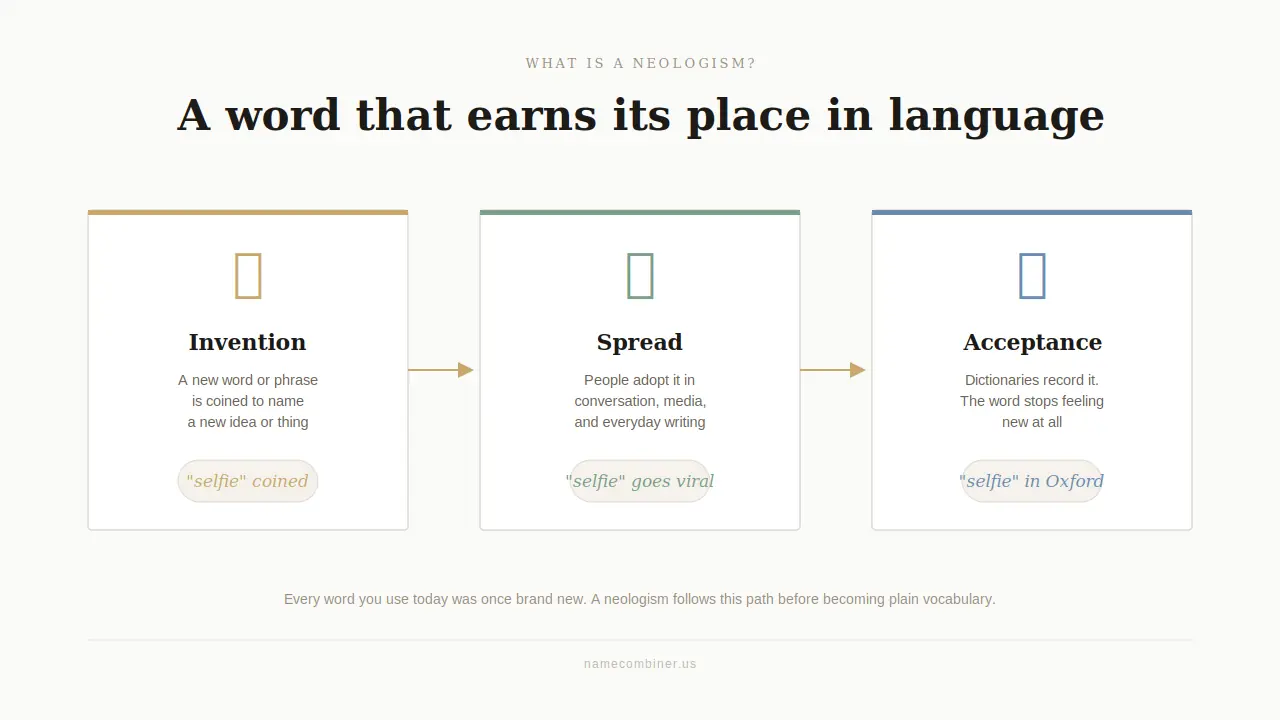
The typical lifecycle of a new word becoming mainstream.
The key idea is usefulness. People don't make new terms only for fun. They make them because an old word doesn't quite cover a new idea, trend, tool, or experience. Over time, some of those terms fade, while others settle into daily speech.
The word itself has old roots, but the concept is easy to spot in modern life. If a term feels fresh and catches on, it may be a neologism. For a solid reference point, Scribbr's explanation of neologism examples shows how both new words and new meanings fit under the same label.
A new word, phrase, or new meaning
A neologism doesn't have to be built from scratch. "Selfie" was new when phone cameras changed how people took photos. "Brunch" joined "breakfast" and "lunch" into one useful word. "Woke" already existed, but its meaning shifted in modern social and political talk.
That mix matters because language changes in more than one way. Sometimes speakers invent a term. Sometimes they recycle an old one and give it a role it didn't have before.
Why languages create new words
Languages keep making new words because people keep meeting new situations. The internet needed words like "blog" and "meme." Social habits gave us terms like "ghosting." Public events can do it too, especially when a new idea spreads fast and many people need the same shorthand.
In other words, neologisms are a practical response to change. They help people speak with speed, precision, and a shared sense of what's happening.
Examples of neologisms people use every day
The easiest way to understand a neologism is to look at words people already use. Many started in small groups or online spaces, then spread so widely that they now sound normal.
Common modern examples like selfie, FOMO, and doomscrolling
"Selfie" names a self-taken photo, usually with a phone. It became popular because the habit became common. "FOMO," short for "fear of missing out," packed a whole social feeling into four letters. "Doomscrolling" came later, and it describes endlessly reading bad news on a screen.
All three count as neologisms because they gave people quick labels for modern behavior. The same is true for "meme," which once sounded niche and now appears in everyday talk, classrooms, and news stories. Words like "adulting" and "podcast" followed a similar path. They sounded casual at first, yet repeated use made them easy to understand in daily life.
Older examples that were once new, like brunch and smog
Neologisms aren't only internet words. "Brunch" sounded fresh when people began using it for a late morning meal. "Smog" blended "smoke" and "fog" into one compact word for polluted air. "Podcast" also started as a blend, joining ideas from "iPod" and "broadcast."
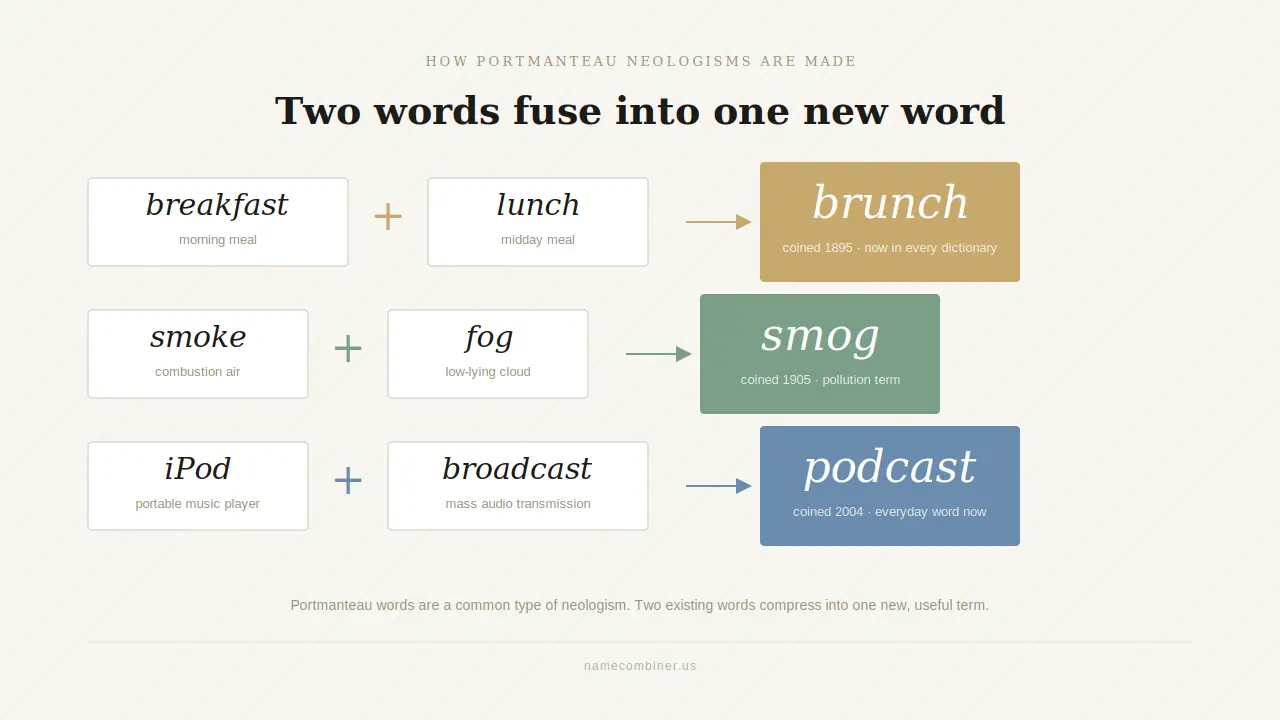
Portmanteaus are a common way to create new, useful words.
These older examples show how a new word can lose its newness. After enough years, it simply becomes part of normal English. "Google" works the same way in a different form, since a brand name became a common verb for searching online.
Blended words are a big part of this story. If you're curious how those combinations take shape, this page on the science of portmanteau word formation gives a simple look at how two terms can fuse into one.
How a neologism becomes part of everyday language
A new word rarely appears everywhere at once. It usually starts in a small circle, such as friends, gamers, students, activists, or tech workers. Then repetition does the heavy lifting. If the word fills a real need and people understand it fast, it spreads.
From slang or brand-new word to mainstream use
Media speeds that process up. A term may jump from a group chat to TikTok, then to classrooms, offices, headlines, and everyday conversation. A recent linguistics explainer from Syracuse University describes this pattern well: public use usually comes first, and formal recognition comes later.
Dictionaries usually wait for broad, stable use. They don't create a word on the spot. They record that speakers have already made room for it.
Once a word becomes ordinary, most people stop seeing it as special. "Brunch" no longer feels inventive. "Selfie" barely does. That's often the final stage of a successful neologism, it becomes plain vocabulary.
When a new meaning matters more than a new word
Sometimes the shape of the word stays the same, but the meaning shifts. "Woke" is a clear example. The word existed before, yet its newer social meaning gave it fresh life in public conversation.
The same thing happens when older words move into new settings. "Friend" became a verb on social media. "Cloud" gained a tech meaning. Language changes this way because people want short, familiar words for new ideas. A neologism, then, isn't only about invention. It's also about reuse that catches on.
Conclusion
A neologism is a new word, a new phrase, or a new meaning for an existing word. Once you notice that, everyday English looks a little different.
Words like "selfie," "doomscrolling," and "brunch" show how flexible language is. People keep making new terms because life keeps handing them new things to name. Some fade fast, but the best ones stick because they say exactly what people need to say.